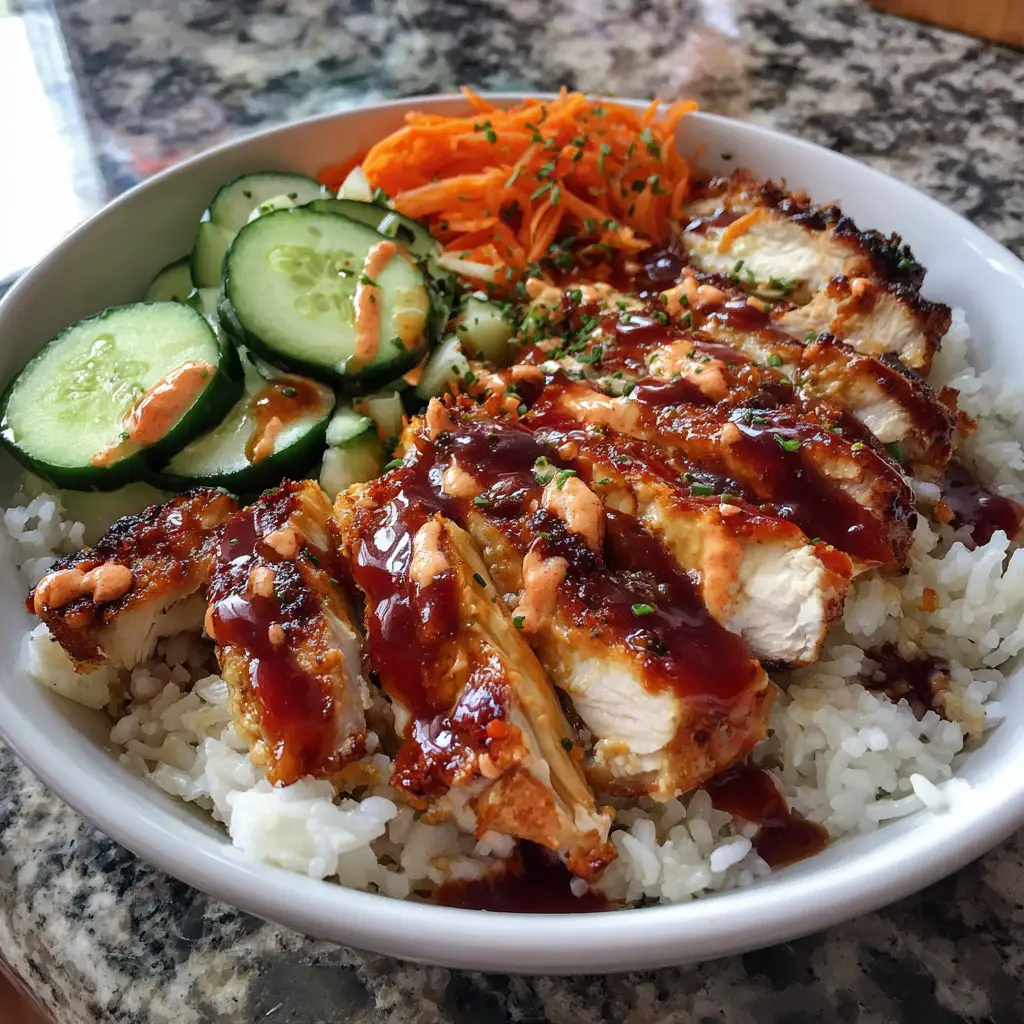
Korean BBQ Chicken Bowls with Gochujang Cream Sauce represent a magnificent and utterly craveable convergence of vibrant Korean flavors, comforting meal-bowl architecture, and the modern desire for meals that are both explosively flavorful and beautifully composed. This dish is a symphony of contrasts and harmonies. Imagine tender, juicy pieces of chicken, marinated in a complex, sweet, savory, and subtly funky Korean BBQ-inspired glaze, then seared to caramelized perfection. This centerpiece is laid upon a bed of fluffy, steaming rice and surrounded by an array of crisp, bright, and often pickled vegetables. The crowning glory is a luxurious, drizzle-able sauce that is nothing short of alchemy: the deep, spicy, fermented complexity of gochujang (Korean red chili paste) is tamed and transformed into a creamy, dreamy, and irresistibly smooth condiment that ties every single component together.
Why Is This Korean BBQ Chicken Bowls with Gochujang Cream Sauce So Popular?
The stratospheric popularity of this dish is a direct result of its perfect alignment with contemporary food trends and universal taste preferences. First, it is the epitome of the “bowl meal,” a globally beloved format that promises a complete, nutritious, and aesthetically pleasing meal in a single vessel. Second, it capitalizes on the world’s growing fascination with Korean cuisine, specifically the craveable sweet-spicy-salty profile of Korean BBQ and the unique, fermented depth of gochujang, an ingredient that has rightfully become a pantry superstar. Third, it masterfully balances health and indulgence; the bowl is packed with lean protein and fresh vegetables, yet the marinated chicken and creamy sauce deliver a profoundly satisfying richness that feels like a treat. Furthermore, its popularity is sustained by its customizable nature—each component can be tailored to dietary needs and personal taste, making it a crowd-pleaser for families and groups. Finally, it is a visual and textural masterpiece, with vibrant colors and varied crunches that are endlessly photogenic, fueling its presence across social media and food blogs. It is popular because it is simultaneously exciting, comforting, healthy, decadent, and beautiful.
Why You’ll Love This Korean BBQ Chicken Bowls with Gochujang Cream Sauce:
- Flavor Bomb Experience: Delivers a multi-layered, umami-packed flavor profile that is far greater than the sum of its parts.
- Perfect Meal-Prep Champion: All components can be prepared ahead and assembled quickly for lunches or easy dinners throughout the week.
- Endlessly Adaptable: Easily swap proteins (tofu, beef, shrimp), vegetables, or grains to suit what you have on hand.
- Family-Friendly & Interactive: Allows everyone to build their own bowl to their liking, making dinner fun and engaging.
- Restaurant-Quality at Home: Recreates the exciting, bold flavors of Korean dining without the need for specialized equipment or hard-to-find ingredients.
Here’s what you’ll need:
For the Korean BBQ Chicken Marinade:
- 1.5 lbs boneless, skinless chicken thighs (preferred for juiciness) or chicken breast, cut into 1-inch bite-sized pieces
- ¼ cup low-sodium soy sauce (or tamari for gluten-free)
- 3 tablespoons brown sugar (light or dark)
- 2 tablespoons gochujang (Korean red chili paste)
- 1 tablespoon toasted sesame oil
- 1 tablespoon rice vinegar
- 4 cloves garlic, minced
- 1 tablespoon fresh ginger, minced or grated
- 1 tablespoon mirin (or substitute ½ tbsp rice vinegar + ½ tsp sugar)
- 1 teaspoon freshly ground black pepper
- 2 teaspoons neutral oil (like avocado or canola) for cooking
For the Gochujang Cream Sauce:
- ½ cup mayonnaise (Kewpie mayo is ideal for its umami)
- ¼ cup sour cream or plain Greek yogurt
- 2-3 tablespoons gochujang (adjust for heat preference)
- 1 tablespoon honey or maple syrup
- 1 tablespoon rice vinegar
- 1 teaspoon toasted sesame oil
- 1 small clove garlic, grated to a paste
- 1-2 tablespoons milk or buttermilk, to thin to desired drizzling consistency
- Salt to taste
For the Bowls & Assembly:
- 2 cups cooked white rice (sushi or jasmine), or brown rice, quinoa, or cauliflower rice
- 1 English cucumber, thinly sliced or julienned
- 2 large carrots, julienned or shredded
- 1 cup red cabbage, thinly shredded
- 4 radishes, thinly sliced
- 2 green onions, thinly sliced on the bias
- 1 tablespoon toasted sesame seeds
- Fresh cilantro leaves, for garnish (optional)
- Kimchi, for serving (highly recommended)
- Soft-boiled or fried eggs, for topping (optional)
- Nori seaweed strips, for topping (optional)
For the Quick-Pickled Vegetables (Optional but Recommended):
- ½ cup rice vinegar
- ¼ cup water
- 2 tablespoons sugar
- 1 teaspoon salt
- Combined with the cucumber, carrot, and/or red cabbage
How to Make Korean BBQ Chicken Bowls with Gochujang Cream Sauce:
Now that you have your ingredients ready, let’s dive into the steps for making this delightful Korean BBQ Chicken Bowls with Gochujang Cream Sauce. It’s as easy as pie, and I promise you’ll feel like a culinary superstar!
Step 1: Marinate the Chicken
In a medium bowl, whisk together all the marinade ingredients: soy sauce, brown sugar, 2 tbsp gochujang, sesame oil, rice vinegar, minced garlic, ginger, mirin, and black pepper until the sugar and gochujang are fully dissolved. Place the cubed chicken in a large resealable bag or shallow dish. Pour the marinade over the chicken, ensuring all pieces are coated. Seal or cover and refrigerate for at least 30 minutes, but ideally for 2-4 hours for maximum flavor penetration. Do not exceed 8 hours for chicken thighs due to the acid.
Step 2: Prepare the Gochujang Cream Sauce
While the chicken marinates, make the sauce. In a small bowl, combine the mayonnaise, sour cream, 2-3 tbsp gochujang, honey, rice vinegar, 1 tsp sesame oil, and grated garlic. Whisk vigorously until completely smooth, creamy, and uniform in color. Taste and adjust: add more gochujang for heat, more honey for sweetness, or a pinch of salt. Gradually whisk in milk, one tablespoon at a time, until the sauce reaches a perfect, drizzle-able consistency (like a runny yogurt). Cover and refrigerate until ready to use.
Step 3: Prepare All Bowl Components
Cook your rice according to package directions so it’s ready and warm. Prepare all vegetables: julienne the carrots, thinly slice the cucumber and radishes, shred the cabbage, and slice the green onions. For an extra flavor boost, quick-pickle the cucumber, carrots, and/or cabbage: bring the rice vinegar, water, sugar, and salt to a simmer until dissolved. Pour over vegetables in a heatproof bowl and let sit for at least 20 minutes, then drain.
Step 4: Cook the Marinated Chicken
Heat the 2 teaspoons of neutral oil in a large non-stick skillet or wok over medium-high heat. Using tongs, remove the chicken pieces from the marinade, letting excess drip off (RESERVE THE MARINADE). Add the chicken to the hot skillet in a single layer, working in batches if necessary to avoid steaming. Cook undisturbed for 3-4 minutes to get a good sear, then flip and cook for another 3-4 minutes until cooked through and caramelized on the edges. Transfer to a clean plate.
Step 5: Reduce the Marinade into a Glaze
Pour the reserved marinade into the still-hot skillet (be careful, it may splatter). Bring to a boil over medium heat, then reduce to a simmer. Cook, stirring constantly, for 3-5 minutes until the marinade thickens slightly into a glossy glaze and is cooked through (this ensures food safety). Return the cooked chicken to the skillet and toss thoroughly to coat every piece in the sticky, reduced glaze. Remove from heat.
Step 6: Assemble the Bowls
Start with a generous base of warm rice in each serving bowl. Arrange the glazed chicken pieces artfully over one section of the rice. Neatly arrange your prepared vegetables (cucumber, carrot, cabbage, radishes) around the bowl in separate little piles for visual appeal and texture contrast.
Step 7: Garnish and Serve
Drizzle the entire bowl generously with the cool, creamy gochujang sauce. Sprinkle lavishly with sliced green onions and toasted sesame seeds. Add a side of kimchi, place a soft-boiled egg half on top if using, and garnish with cilantro and nori strips. Serve immediately, encouraging everyone to mix their bowl together to combine all the glorious flavors and textures.
Tips for Success:
- Use Chicken Thighs: They are more forgiving and stay incredibly juicy during the high-heat cooking required for caramelization.
- Don’t Skip Toasted Sesame Oil: It is a non-negotiable flavor backbone of Korean cuisine. Ensure it’s toasted sesame oil for that deep, nutty aroma.
- Adjust Gochujang Heat Gradually: Gochujang brands vary in spice level. Start with the lower amount in both the marinade and sauce, then taste and add more.
- Get That Fond: When cooking the chicken, don’t move it too early. Let it develop a dark, caramelized crust (fond) on the pan—this flavor gets incorporated into the glaze.
- Always Boil the Marinade: For food safety, you must boil the reserved marinade for several minutes before using it as a glaze to kill any bacteria from the raw chicken.
- Contrast Temperatures: The beauty is in the hot chicken and rice against the cool, crisp vegetables and creamy sauce. Don’t serve everything piping hot.
Equipment Needed:
- Large Skillet or Wok
- Medium Mixing Bowls
- Whisk
- Tongs
- Sharp Knife & Cutting Board
- Julienne Peeler or Mandoline (for vegetables, optional but helpful)
- Rice Cooker or Pot (for rice)
Variations of Korean BBQ Chicken Bowls with Gochujang Cream Sauce:
- Spicy Pork (Dwaeji Bulgogi) Bowls: Substitute chicken with thinly sliced pork shoulder.
- Crispy Tofu Bowls: Use extra-firm tofu, pressed, cubed, and cornstarch-dusted before pan-frying until crispy, then toss in the glaze.
- Beef Bulgogi Bowls: Use thinly sliced ribeye or sirloin in a classic bulgogi marinade (swap pear for some sugar).
- Gochujang Cream Noodle Bowl: Serve the chicken and sauce over chewy udon or ramen noodles instead of rice.
- Low-Carb/Keto Version: Use cauliflower rice, increase the vegetable volume, and use a sugar substitute like allulose in the marinade.
- Add Fruit Sweetness: Add 1-2 tbsp of grated Asian pear or apple to the chicken marinade for tenderizing and subtle fruitiness.
Serving Suggestions for Korean BBQ Chicken Bowls with Gochujang Cream Sauce:
- The Classic Bowl: As described above, with all the vegetable trimmings and an egg on top.
- Lettuce Wraps (Ssambap): Serve the components with large, crisp lettuce leaves (like romaine or red leaf) for wrapping.
- Meal Prep: Portion the cooled rice, chicken, and raw veggies into airtight containers. Keep the sauce separate. Assemble and drizzle just before eating.
- As a Sharing Platter: Serve all components separately on a large board or in bowls for a DIY, interactive dinner party.
- With Soup: Serve alongside a light Korean soup like miyeokguk (seaweed soup) or doenjang jjigae (soybean paste stew).
Prep Time:
45 minutes (including marinating time)
Cooking Time:
15 minutes
Total Time:
1 hour
Nutritional Information:
(Estimated per bowl, based on 4 servings with white rice)
- Calories: ~680
- Protein: 42g
- Sodium: ~1350mg (varies with soy sauce)
- Sugar: 25g
- Fat: 28g (Saturated Fat: 6g)
- Carbohydrates: 65g
- Fiber: 4g
FAQs about Korean BBQ Chicken Bowls with Gochujang Cream Sauce:
Q: Where can I find gochujang?
A: Gochujang is readily available in the Asian/international aisle of most major supermarkets, at Korean grocery stores, or online. It is sold in tubs or plastic packages.
Q: Can I make this dish less spicy?
A: Absolutely. Control the heat by using less gochujang in both the marinade and the sauce. You can also increase the mayo/sour cream and honey in the sauce to further tame the heat while keeping the flavor.
Q: Is there a substitute for gochujang?
A: A true substitute is difficult due to its unique fermented flavor. In a pinch, you could mix miso paste with a bit of sriracha and sugar, but the result will be different. Seeking out real gochujang is highly recommended.
Q: Can I grill the chicken instead?
A: Yes! Skewer the marinated chicken pieces and grill over medium-high heat, basting with the reserved (and boiled) marinade, until charred and cooked through.
Q: How long do leftovers keep?
A: Store components separately in airtight containers in the fridge. Chicken and rice keep for 3-4 days. The sauce keeps for up to 1 week. Assemble just before eating.
Q: Can I use chicken breast?
A: Yes, but be vigilant not to overcook it, as it can dry out faster than thighs. Cook just until the internal temperature reaches 165°F (74°C).
Final Thoughts:
Korean BBQ Chicken Bowls with Gochujang Cream Sauce are a vibrant, fulfilling, and endlessly rewarding culinary project that perfectly captures the dynamic spirit of modern home cooking. This dish is a celebration of bold flavors, thoughtful textures, and the joy of creating a restaurant-worthy experience in your own kitchen. The process—from whisking the marinade to drizzling the final, creamy-red sauce—is as enjoyable as the meal itself. It empowers you to play with one of the world’s great flavor foundations (gochujang) and build a meal that is nutritionally complete, visually stunning, and deeply satisfying on every level. Whether you’re meal-prepping for a busy week, hosting a casual dinner with friends, or simply treating yourself to a flavor adventure, these bowls deliver on every promise.
Print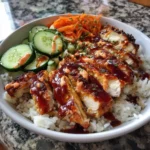
Korean BBQ Chicken Bowls with Gochujang Cream Sauce: Bold & Creamy
- Total Time: 1 hour
Description
Tender grilled chicken, fluffy rice, and fresh veggies topped with a spicy-sweet gochujang cream sauce. An easy, restaurant-style bowl bursting with Korean-inspired flavor.
Ingredients
For the Korean BBQ Chicken Marinade:
-
1.5 lbs boneless, skinless chicken thighs (preferred for juiciness) or chicken breast, cut into 1-inch bite-sized pieces
-
¼ cup low-sodium soy sauce (or tamari for gluten-free)
-
3 tablespoons brown sugar (light or dark)
-
2 tablespoons gochujang (Korean red chili paste)
-
1 tablespoon toasted sesame oil
-
1 tablespoon rice vinegar
-
4 cloves garlic, minced
-
1 tablespoon fresh ginger, minced or grated
-
1 tablespoon mirin (or substitute ½ tbsp rice vinegar + ½ tsp sugar)
-
1 teaspoon freshly ground black pepper
-
2 teaspoons neutral oil (like avocado or canola) for cooking
For the Gochujang Cream Sauce:
-
½ cup mayonnaise (Kewpie mayo is ideal for its umami)
-
¼ cup sour cream or plain Greek yogurt
-
2–3 tablespoons gochujang (adjust for heat preference)
-
1 tablespoon honey or maple syrup
-
1 tablespoon rice vinegar
-
1 teaspoon toasted sesame oil
-
1 small clove garlic, grated to a paste
-
1–2 tablespoons milk or buttermilk, to thin to desired drizzling consistency
-
Salt to taste
For the Bowls & Assembly:
-
2 cups cooked white rice (sushi or jasmine), or brown rice, quinoa, or cauliflower rice
-
1 English cucumber, thinly sliced or julienned
-
2 large carrots, julienned or shredded
-
1 cup red cabbage, thinly shredded
-
4 radishes, thinly sliced
-
2 green onions, thinly sliced on the bias
-
1 tablespoon toasted sesame seeds
-
Fresh cilantro leaves, for garnish (optional)
-
Kimchi, for serving (highly recommended)
-
Soft-boiled or fried eggs, for topping (optional)
-
Nori seaweed strips, for topping (optional)
For the Quick-Pickled Vegetables (Optional but Recommended):
-
½ cup rice vinegar
-
¼ cup water
-
2 tablespoons sugar
-
1 teaspoon salt
-
Combined with the cucumber, carrot, and/or red cabbage
Instructions
Step 1: Marinate the Chicken
In a medium bowl, whisk together all the marinade ingredients: soy sauce, brown sugar, 2 tbsp gochujang, sesame oil, rice vinegar, minced garlic, ginger, mirin, and black pepper until the sugar and gochujang are fully dissolved. Place the cubed chicken in a large resealable bag or shallow dish. Pour the marinade over the chicken, ensuring all pieces are coated. Seal or cover and refrigerate for at least 30 minutes, but ideally for 2-4 hours for maximum flavor penetration. Do not exceed 8 hours for chicken thighs due to the acid.
Step 2: Prepare the Gochujang Cream Sauce
While the chicken marinates, make the sauce. In a small bowl, combine the mayonnaise, sour cream, 2-3 tbsp gochujang, honey, rice vinegar, 1 tsp sesame oil, and grated garlic. Whisk vigorously until completely smooth, creamy, and uniform in color. Taste and adjust: add more gochujang for heat, more honey for sweetness, or a pinch of salt. Gradually whisk in milk, one tablespoon at a time, until the sauce reaches a perfect, drizzle-able consistency (like a runny yogurt). Cover and refrigerate until ready to use.
Step 3: Prepare All Bowl Components
Cook your rice according to package directions so it’s ready and warm. Prepare all vegetables: julienne the carrots, thinly slice the cucumber and radishes, shred the cabbage, and slice the green onions. For an extra flavor boost, quick-pickle the cucumber, carrots, and/or cabbage: bring the rice vinegar, water, sugar, and salt to a simmer until dissolved. Pour over vegetables in a heatproof bowl and let sit for at least 20 minutes, then drain.
Step 4: Cook the Marinated Chicken
Heat the 2 teaspoons of neutral oil in a large non-stick skillet or wok over medium-high heat. Using tongs, remove the chicken pieces from the marinade, letting excess drip off (RESERVE THE MARINADE). Add the chicken to the hot skillet in a single layer, working in batches if necessary to avoid steaming. Cook undisturbed for 3-4 minutes to get a good sear, then flip and cook for another 3-4 minutes until cooked through and caramelized on the edges. Transfer to a clean plate.
Step 5: Reduce the Marinade into a Glaze
Pour the reserved marinade into the still-hot skillet (be careful, it may splatter). Bring to a boil over medium heat, then reduce to a simmer. Cook, stirring constantly, for 3-5 minutes until the marinade thickens slightly into a glossy glaze and is cooked through (this ensures food safety). Return the cooked chicken to the skillet and toss thoroughly to coat every piece in the sticky, reduced glaze. Remove from heat.
Step 6: Assemble the Bowls
Start with a generous base of warm rice in each serving bowl. Arrange the glazed chicken pieces artfully over one section of the rice. Neatly arrange your prepared vegetables (cucumber, carrot, cabbage, radishes) around the bowl in separate little piles for visual appeal and texture contrast.
Step 7: Garnish and Serve
Drizzle the entire bowl generously with the cool, creamy gochujang sauce. Sprinkle lavishly with sliced green onions and toasted sesame seeds. Add a side of kimchi, place a soft-boiled egg half on top if using, and garnish with cilantro and nori strips. Serve immediately, encouraging everyone to mix their bowl together to combine all the glorious flavors and textures
Notes
-
Large Skillet or Wok
-
Medium Mixing Bowls
-
Whisk
-
Tongs
-
Sharp Knife & Cutting Board
-
Julienne Peeler or Mandoline
- Prep Time: 45 minutes
- Category: Dinner
- Cuisine: American
Nutrition
- Calories: 680
- Sugar: 25g
- Sodium: 1350mg
- Fat: 28g
- Saturated Fat: 6g
- Carbohydrates: 65g
- Fiber: 4g
- Protein: 42g
- Cholesterol: 0