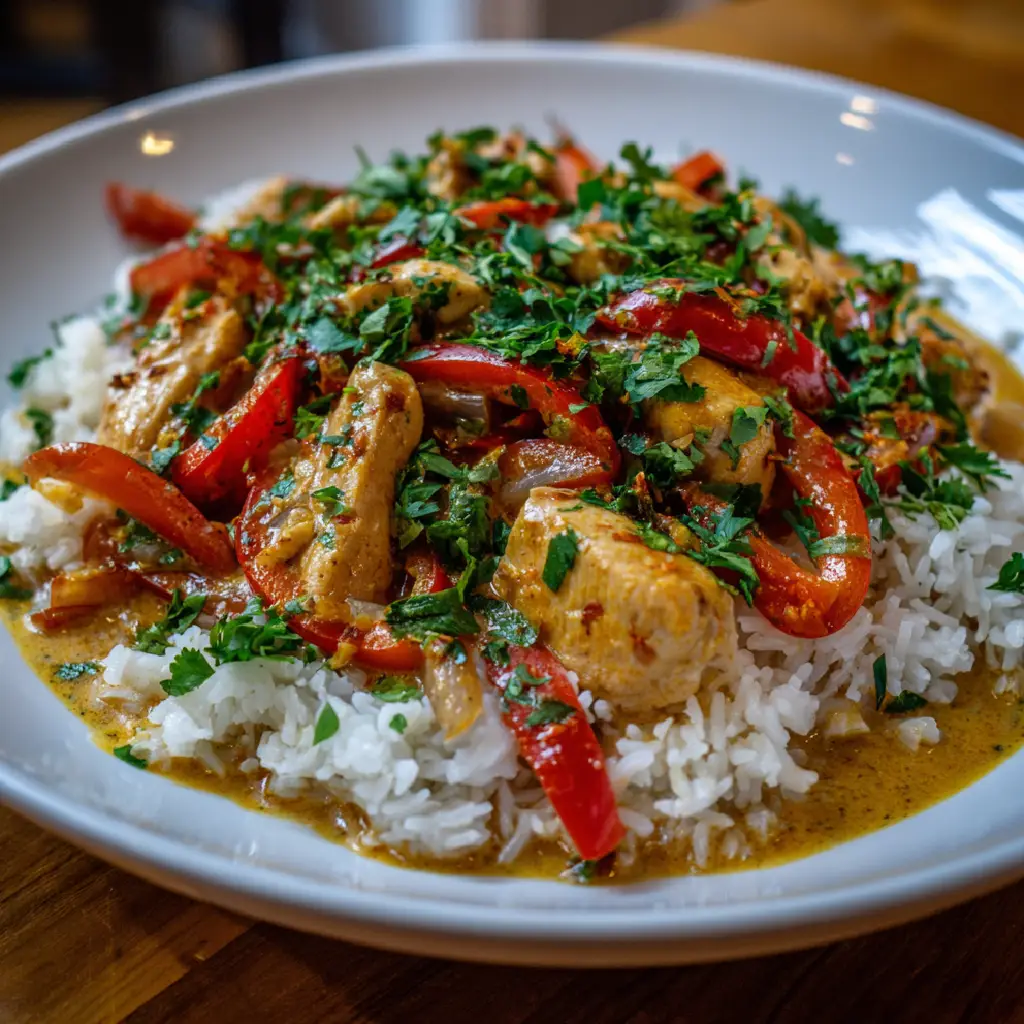
Introduction to Thai Coconut Curry Chicken:
Thai Coconut Curry Chicken is not merely a dish; it is an immersive sensory journey, a vibrant and aromatic symphony that encapsulates the very soul of Thai cuisine in a single, simmering pot. Imagine tender, succulent pieces of chicken, gently poached in a luxuriously creamy, golden-hued coconut milk broth, infused with a complex paste of lemongrass, galangal, and kaffir lime leaves, and enlivened with the perfect balance of fiery chilies, earthy turmeric, and briny fish sauce. This curry is a masterclass in harmonious contrast, the rich, sweet creaminess of coconut milk tempers the assertive heat of the chilies, the bright acidity of lime juice cuts through the fat, and the salty umami of fish sauce deepens every layer of flavor.
Why Is This Thai Coconut Curry Chicken So Popular?
The global and enduring popularity of Thai Coconut Curry Chicken is a testament to its profound ability to deliver extraordinary, restaurant-quality flavor with an accessible cooking process. First, it is the epitome of comfort food with a thrilling twist. It provides the soothing, creamy richness of a stew, but electrified with layers of exotic, aromatic heat and tang that wake up the palate in the most delightful way. Secondly, it is highly adaptable and forgiving. The heat level can be precisely controlled, the protein can be swapped, and the vegetable additions can vary based on season and preference, making it a versatile blueprint for countless delicious variations. Furthermore, it is a one-pot wonder with incredible depth. The entire dish builds flavor sequentially in one pot, from toasting the curry paste to simmering the chicken and vegetables in the coconut broth, resulting in a cohesive, complex sauce that belies its relatively short cooking time. Finally, it satisfies the modern craving for bold, global flavors. In a world of adventurous eaters, this dish offers an authentic taste of Southeast Asia that is both exciting and approachable, allowing home cooks to explore aromatic ingredients like lemongrass and galangal without requiring specialized techniques.
Why You’ll Love This Thai Coconut Curry Chicken:
- Restaurant-Quality at Home: Recreates the deep, authentic flavors of your favorite Thai restaurant with ingredients you can find at most well-stocked supermarkets.
- Faster Than Takeout: From start to finish, it can be on your table in about 45 minutes, often quicker than delivery.
- A Complete, Balanced Meal: Served over rice, it perfectly combines protein, vegetables, and healthy fats in one flavorful bowl.
- Fantastic for Meal Prep: The flavors meld and intensify overnight, making leftovers a coveted lunch.
- Naturally Gluten-Free: When using gluten-free fish sauce or soy sauce alternatives, it easily accommodates dietary restrictions.
Here’s what you’ll need:
For the Curry Paste & Aromatics:
- 3-4 tablespoons Thai red or yellow curry paste (Mae Ploy or Maesri brands are excellent)
- 1 stalk lemongrass, trimmed, outer layers removed, and finely minced (or 2 tbsp prepared lemongrass paste)
- 1-inch piece of galangal or ginger, peeled and finely grated
- 4-6 kaffir lime leaves, fresh or frozen, finely shredded (or 2 tsp lime zest)
- 4 cloves garlic, minced
- 1 small shallot, minced
- 1-3 Thai bird’s eye chilies, minced (adjust to heat preference)
For the Curry Base:
- 1.5 lbs boneless, skinless chicken thighs or breasts, cut into 1-inch bite-sized pieces
- 2 (13.5 oz) cans full-fat coconut milk (do not use “light” for best flavor)
- 1 ½ cups low-sodium chicken broth or water
- 2-3 tablespoons fish sauce (or soy sauce/tamari for a vegetarian version)
- 1-2 tablespoons palm sugar or light brown sugar
- 2 tablespoons coconut oil or neutral oil
- 1 tablespoon fresh turmeric, grated (or 1 tsp ground turmeric)
For the Vegetables & Finish:
- 1 red bell pepper, sliced into strips
- 1 medium onion, sliced into wedges
- 1 cup sliced bamboo shoots, drained (optional)
- 1 cup Thai eggplant, halved, or 1 small regular eggplant, cubed (optional)
- Juice of 1-2 limes (about 3-4 tablespoons)
- ½ cup fresh Thai basil leaves (or regular basil)
- ¼ cup fresh cilantro, chopped
For Serving:
- Steamed jasmine rice
- Lime wedges
- Additional fresh herbs
- Sambal oelek or sliced chilies for extra heat
How to Make Thai Coconut Curry Chicken:
Now that you have your ingredients ready, let’s dive into the steps for making this delightful Thai Coconut Curry Chicken. It’s as easy as pie, and I promise you’ll feel like a culinary superstar!
Step 1: Toast the Curry Paste for Depth
Heat the coconut oil in a large Dutch oven or heavy-bottomed pot over medium heat. Add the Thai curry paste. Cook, stirring constantly, for 2-3 minutes until it becomes incredibly fragrant and the oil starts to separate from the paste. This crucial step “blooms” the spices, unlocking their full aromatic potential.
Step 2: Build the Aromatic Foundation
Add the minced lemongrass, grated galangal (or ginger), shredded kaffir lime leaves, minced garlic, shallot, and minced chilies to the toasted paste. Stir and cook for another 2 minutes until the shallot softens and the mixture is intensely aromatic.
Step 3: Brown the Chicken
Increase the heat to medium-high. Add the chicken pieces to the pot. Stir to coat them thoroughly in the fragrant paste. Cook for 4-5 minutes, stirring occasionally, until the chicken is mostly opaque on the outside. It does not need to be cooked through.
Step 4: Create the Luxurious Coconut Broth
Reduce the heat to medium. Pour in one can of coconut milk and stir well, scraping up any bits stuck to the bottom of the pot. Add the chicken broth, fish sauce, palm sugar, and grated turmeric. Stir until the sugar dissolves. Bring the mixture to a gentle simmer.
Step 5: Simmer to Infuse Flavor
Once simmering, add the tougher vegetables like bamboo shoots and eggplant (if using). Cover the pot, reduce the heat to low, and let it simmer gently for 15 minutes to allow the chicken to cook through and the flavors to meld deeply.
Step 6: Add Quick-Cook Vegetables & Cream
After 15 minutes, stir in the remaining can of coconut milk, along with the bell pepper and onion. Simmer uncovered for another 5-7 minutes, just until the vegetables are tender-crisp and the sauce has thickened slightly.
Step 7: The Vital Finish with Freshness
Remove the pot from the heat. Stir in the fresh lime juice. Taste the curry—this is the time to balance the flavors. It should be a harmony of salty (fish sauce), sweet (sugar), sour (lime), and spicy (chilies). Adjust accordingly. Just before serving, fold in the fresh Thai basil and cilantro leaves. The residual heat will wilt them perfectly.
Tips for Success:
- Don’t Skip Toasting the Paste: This is the non-negotiable step that separates a flat curry from a magnificent one.
- Use Full-Fat Coconut Milk: The fat carries flavor and creates the signature creamy, luxurious texture. Light coconut milk will make the curry thin and less rich.
- Balance the Flavors at the End: Thai cuisine is all about balance. After adding the lime juice, taste and adjust. Need more salt? Add a dash of fish sauce. Too spicy? A bit more sugar or coconut milk. Too sour? A pinch more sugar.
- Chicken Thighs are King: They are more flavorful and forgiving than breasts, staying juicy through the simmering process.
- Fresh Herbs are Non-Negotiable: The lime juice, basil, and cilantro added at the end provide the critical fresh, bright notes that define the dish. Do not substitute dried herbs.
Equipment Needed:
- Large Dutch oven or heavy-bottomed pot with lid
- Sharp chef’s knife and cutting board
- Microplane or fine grater (for ginger/turmeric/galangal)
- Measuring cups and spoons
- Wooden spoon or spatula
- Citrus juicer
Variations of Thai Coconut Curry Chicken:
- Thai Green or Massaman Curry: Simply substitute red curry paste with green curry paste (spicier, herbaceous) or Massaman curry paste (milder, with cinnamon and cardamom notes).
- Shrimp or Tofu Curry: For shrimp, add peeled, deveined large shrimp in the last 3-5 minutes of cooking. For tofu, use extra-firm tofu, pressed and cubed, and add with the vegetables.
- Pumpkin or Sweet Potato Curry: Add 1-2 cups of cubed pumpkin or sweet potato with the chicken; they will break down slightly and thicken the sauce beautifully.
- Pineapple Curry: Add 1 cup of fresh or canned pineapple chunks with the bell pepper for a sweet and tangy twist.
- Creamy Cashew Curry: Stir in ¼ cup of cashew butter or smooth peanut butter with the second can of coconut milk for a nutty, rich variation.
Serving Suggestions for Thai Coconut Curry Chicken:
- Over Jasmine Rice: The classic and essential pairing. The fragrant, slightly sticky rice is the perfect vehicle for the curry sauce.
- With Rice Noodles: For a change, serve ladled over wide rice noodles (like sen yai).
- Garnish Galore: Set out extra lime wedges, sliced red chilies, chopped peanuts, crispy fried shallots, and additional herbs for everyone to customize their bowl.
- With a Side: A simple cucumber salad with a sweet-tangy vinegar dressing provides a refreshing, cooling contrast.
Prep Time:
20 minutes
Cooking Time:
30 minutes
Total Time:
50 minutes
Nutritional Information:
(Estimated per serving of curry only, without rice, based on 6 servings)
- Calories: ~420
- Protein: 25g
- Sodium: ~900mg
- Sugar: 8g
- Fat: 32g (mostly saturated from coconut)
- Carbohydrates: 12g
- Fiber: 3g
FAQs about Thai Coconut Curry Chicken:
Q: How can I make this curry less spicy?
A: Use a mild yellow curry paste, remove the seeds and membranes from the Thai chilies, or omit them entirely. You can also increase the coconut milk and add a touch more sugar to balance any remaining heat.
Q: Where can I find specialty ingredients like galangal, kaffir lime leaves, and Thai basil?
A: These are commonly found in well-stocked Asian grocery stores. Many now carry them frozen, which is a great option. In a pinch, use ginger instead of galangal, lime zest instead of kaffir lime leaves, and regular basil (though the flavor profile will shift).
Q: Can I make this in a slow cooker or Instant Pot?
A: Yes. For a slow cooker, sauté the paste and brown the chicken on the stove first, then transfer everything to the slow cooker and cook on LOW for 4-6 hours. For Instant Pot, use the sauté function for steps 1-3, then pressure cook on high for 5 minutes with a quick release, then add the second can of coconut milk and quick-cook veggies using the sauté function.
Q: How do I store and reheat leftovers?
A: Store in an airtight container in the refrigerator for up to 4 days. Reheat gently on the stovetop over low heat, stirring occasionally. The coconut milk may separate slightly when chilled but will re-emulsify upon gentle reheating.
Q: Is this curry freezer-friendly?
A: It freezes fairly well for up to 2 months. Thaw overnight in the refrigerator and reheat gently. The texture of the vegetables may soften slightly upon thawing.
Final Thoughts:
Thai Coconut Curry Chicken is a culinary gateway to the rich and vibrant world of Thai flavors, a dish that rewards curiosity and delivers profound satisfaction. It demystifies the process of creating an authentic-tasting curry at home, teaching the fundamental principles of toasting paste, building a broth, and, most importantly, balancing the four essential flavor pillars. This recipe is more than a list of instructions; it is an invitation to engage your senses, to taste and adjust, and to create a pot of something truly magical. The result is a deeply aromatic, creamy, and complex stew that comforts and excites in equal measure. It is a dish that fosters sharing—steaming bowls passed around a table, each person customizing their own. Mastering this curry is a kitchen triumph that will earn you rave reviews and become a cherished staple in your cooking repertoire, a warm and flavorful reminder of the beautiful complexity of Thai cuisine.